More Than a Picture

Why Rendering Is a Technical Craft in Experiential Design

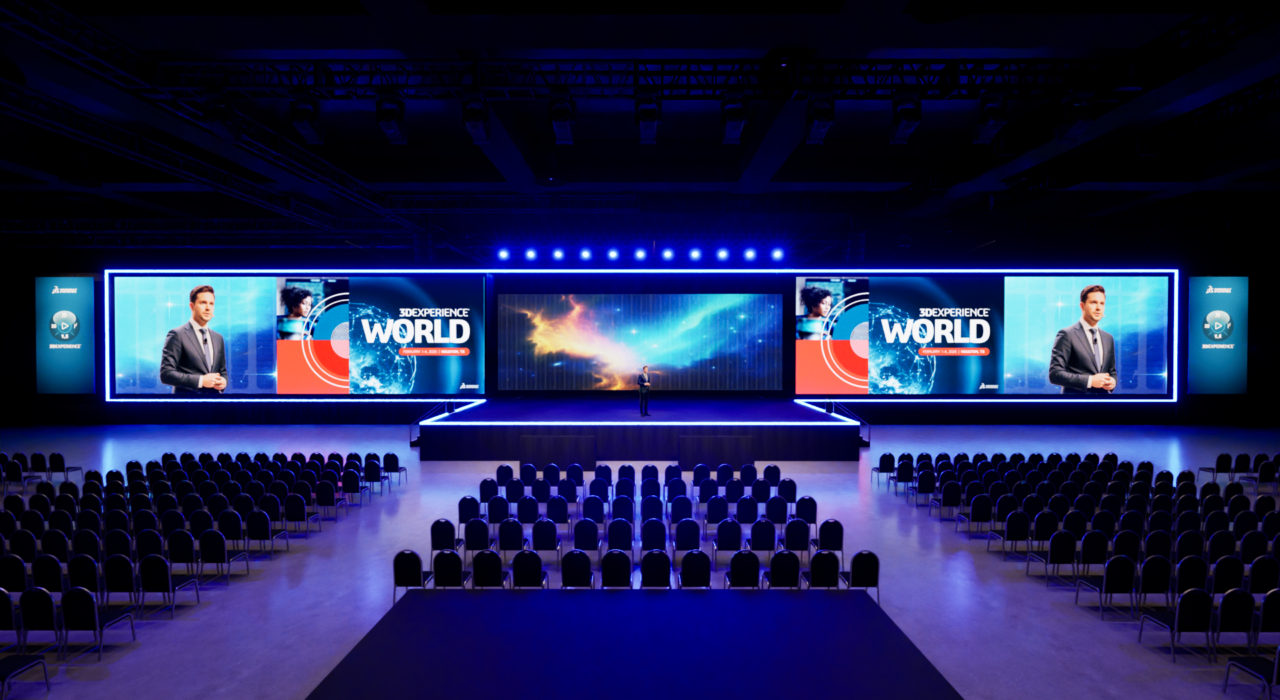
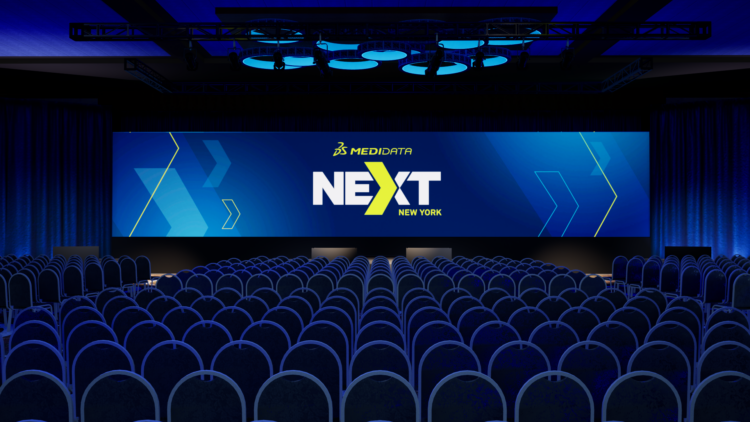
In experiential marketing, renderings are often treated as the moment something finally looks good. They’re a visual translation of a client’s vision — placing chairs in a ballroom, layering in LED screens, lighting, and a stage, or in some cases bringing an entire venue to life before the concrete has even set.

They’re the images that open a deck. The visuals that make people lean forward. The part of the presentation that feels finished. But when rendering is done well, aesthetics is only the surface. The real value lives underneath — in the decisions it enables, the risks it removes, and the disciplines it quietly connects.

At Cramer, rendering isn’t about making ideas look good, but about making them possible.

Where Creative Vision Meets Reality

Every experiential project starts with ambition. Creative teams imagine environments that are immersive, emotional, and memorable, but this ambition alone doesn’t account for ceiling heights, sightlines, screen throw distances, fire codes, labor rules, or load-in schedules. That’s where rendering becomes essential.

Rendering has always played a role in experiential design, but how it’s used — and what it’s responsible for — has evolved to provide not just a visual representation, but a technical blueprint that improves efficiency and smooths the transition from concept to execution. Today, it’s no longer just about showing an idea, it’s about pressure-testing that idea inside the real conditions it will live in.

Instead of designing in a vacuum, Cramer’s renderings are built inside actual spaces whenever possible — or as close to reality as circumstances allow. Hotels that haven’t been completed yet. Ballrooms that only exist on paper. Rooms that clients have walked through empty and now need to imagine fully alive.     This is where rendering stops being visualization and becomes craft.

Precision Is the Point

In a Cramer rendering, nothing is arbitrary. Chairs are built to real dimensions. Aisles follow regulation widths. Screens are sized using viewing templates and sightline coverage. And — often overlooked — we make sure lighting behaves the way it does in the real world.

This level of detail isn’t about perfectionism — it’s about accountability. When a rendering reflects real-world physics and production realities, it becomes something teams can trust and technical directors can validate. Something operations can price and, most importantly, something that clients can believe in.

In addition to improving production efficiency, rendering also elevates the quality of conversation — moving creative ideation from abstract to feasible to executable. Instead of debating abstract ideas, teams can ask sharper questions: Will every seat see the screen? Does this fit the move-in window? What happens if we shift this wall six feet?

Those are questions you want to be answering early before a build is underway, before budgets are locked, and before expectations harden.

A Shared Language Across Teams

One of the most important — and least visible — roles of rendering is how it connects disciplines that often work in parallel.

Creative teams use renderings to understand how ideas live in space, not just on slides. Technical teams use the same models to confirm feasibility, infrastructure needs, and coverage. Operations teams rely on those same renderings to plan labor, logistics, timing, and cost.

When done well, a rendering becomes a shared reference point — a single source of truth that everyone can work from and that handoff matters.

Rendering grants a level of foresight that can reduce friction between teams down the road, minimize late-stage surprises, and create a smoother path from concept to execution. When all teams are aligned and looking at the same thing, speculation can be addressed, questions raised, and — when boots hit the ground — only a clear plan remains. In that sense, rendering isn’t just a design output. It’s a coordination tool.

Reducing Risk Before It Exists

The true value of rendering often appears long before show day. Once we understand a client’s vision, our goal is to hold it, shape it, and show it can exist. We want to show that its possible. When our teams can work out the details, the design, and the vision of the client we can virtually bring it to life — allowing flythroughs and multiple perspectives—across the room and from the stage itself.

When clients can see their experience before it’s built, uncertainty drops. Questions get answered earlier. Assumptions get tested safely. Decisions move faster because confidence is higher.

This is especially critical in high-stakes RFPs, where clients are evaluating bold ideas under tight timelines and significant investment. A rendering doesn’t just communicate creativity — it signals preparedness.

In some cases, Cramer is rendering spaces that don’t exist yet at all. Entire hotel wings still under construction. Rooms only referenced in flythroughs and square footage totals. In those moments, rendering becomes an act of responsibility: using standardized dimensions, industry knowledge, and educated judgment to get as close to reality as possible. It may not be perfect — but it’s grounded enough to stand behind.

That distinction matters. It’s the difference between speculation and stewardship.

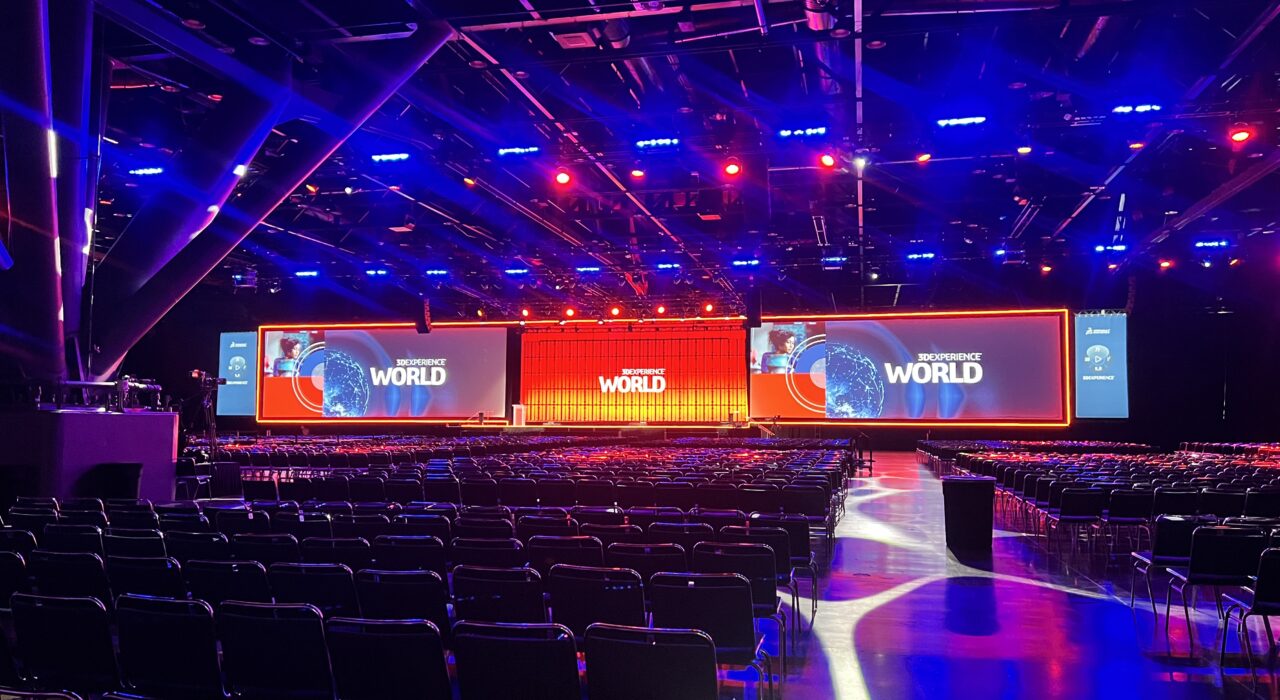
Render to Reality: A Flythrough and a Walkthrough

A rendering of Vimeo REFRAME 2025 (Top) and a pre-show walkthrough of the venue (Bottom), proof of just how closely the vision matched the build.

Why This Isn’t Just AI

As AI-generated imagery becomes more accessible, it’s tempting to assume rendering will become faster, easier, or automated. But in experiential design, speed alone isn’t the goal. Sure, AI can generate compelling images, no question. But what it struggles to generate is accountability.

Currently, it’s clear that AI doesn’t fully understand dimensions — specifically because it struggles to conceptualize three-dimensional space. As a result, it doesn’t consistently obey the laws of physics, nor does it account for practical business factors like budget, labor, or build time. Vanity is one thing, but feasibility and project efficiency — from creative conception through execution — are what ultimately matter.

In experiential work, showing a client something that can’t be built is worse than not showing it at all. The work depends on trust — on the confidence that what’s being presented can move from concept to reality without compromise.

Rendering, as Cramer approaches it, isn’t about generating visuals — that’s just a perk — it’s about taking responsibility for what’s being shown. Every element in the scene has downstream implications. If a client falls in love with something, the team needs to be confident it can be delivered.

That’s why AI, today, is better suited as a support tool than a replacement — helping with texture cleanup or image refinement, but not with the core spatial thinking that experiential design requires.
The Work You Don’t See

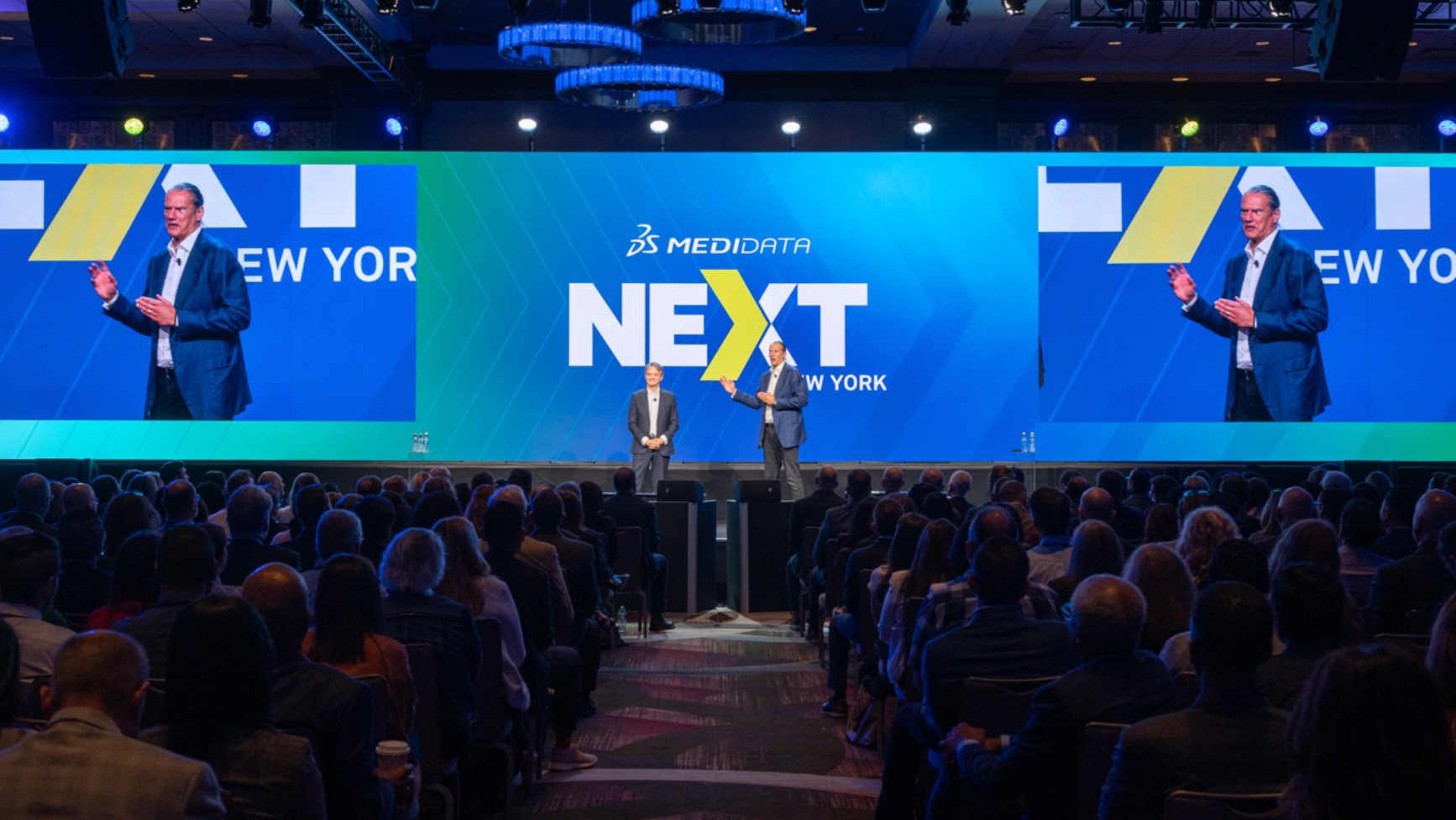
The irony of great rendering is that when it’s done well, it disappears. Clients don’t see the calculations behind sightlines. They don’t see the tradeoffs between creative ambition and load-in time. They don’t see the iterations required to make something feel effortless.

What they see is something that feels finished. Something that feels real. Something that feels safe to say yes to. That believability isn’t accidental, it’s the result of experience, judgment, and a deep understanding of how creative vision, technical feasibility, and operational reality intersect.

Experiential projects are more complex than ever. Timelines are tighter. Expectations are higher. Tolerance for surprises is lower. In that environment, rendering isn’t about selling dreams or fallacies, it’s about honoring them responsibly. When creative ideas are grounded early, when technical realities are accounted for upfront, and when operations can plan with confidence, everyone wins — clients included.

In the end, the most powerful renderings aren’t the ones that look the best. They’re the ones that make everything else work.

Have a project in mind?