Designing Learning for the Generations That Lead

How experiential learning works for Gen X & Baby Boomers (Part III)

In Part II of this series, Building Learning That Works for a Changing Workforce, we explored how experiential learning meets Gen Z and Millennials where they are — fast, immersive, and skills‑driven. But as learning strategies scale across organizations, a different question comes into focus:

How do you modernize learning without alienating the people who carry institutional knowledge, strategic context, and decision‑making authority? This question brings the focus to Gen X and the Baby Boomer generation, who combined, make up roughly 85–90% of C-suite leadership, according to LinkedIn Economic Graph.

With that, the challenge in navigating learning and development outcomes with these generations is not openness to learning — it is trust. The Boomer-Gen X cohort understands that learning and growth are a necessity; however, the key scrutiny when encountering these programs is: “Will this streamline efficiency while addressing and solving existing business challenges?”


How Senior Leaders Stay Ahead — and What It Takes to Meet Them There

Baby Boomers and Gen X are already immersed in continuous learning, but their behaviors differ meaningfully from younger generations. Cramer’s Perspective Series found that 84% of this generational cohort rely on Google and 67% use AI assistants (ChatGPT, Copilot, Claude, etc.) — proof that this generation is not resistant to new technology, but intentional about it.

Their learning ecosystem extends further: 56% turn to LinkedIn, 39% use online courses, 37% attend virtual events, and 36% participate in webinars. They also stay ahead of emerging trends through social media (72%), invite-only events and forums (49%), and curated newsletters (43%).

The throughline across all of it is selectivity. The Boomer-Gen X cohort prioritizes signal over noise, curation over abundance, and insight over novelty. They are already learning — but they expect learning environments to meet them with clarity, relevance, and respect for their time.

Learning environments designed for C-suite generations must act less like classrooms and more like decision‑support systems.

Where Learning Earns Its Place: What Makes an Experience Worth Their Time

When asked what makes an event or learning experience worth attending, senior leaders are unequivocal — 74% cite quality of content and speakers, and 60% prioritize strategic relevance to their role. When it comes to content curation for this audience, it is vital to understand applicability alongside credibility. This cohort brings decades of experience into every room they enter, and that expertise shapes their expectations. They are willing to learn — but the material must earn its place at the table.

Another aspect that differs from Gen Z specifically, is that 52% of Baby Boomers and Gen X said that they value traditional networking opportunities. As traditional networking is deprioritized among younger generations, the idea of connecting in a professional capacity still holds relevancy here — signaling further interest in growth and development. In practice, this looks like creating structured space for peer conversation — think Chatham House rules, no hierarchy, no judgment — where leaders can openly share the challenges they’re actually navigating. That kind of exchange doesn’t just build connection; it builds trust.

Gen X and Baby Boomers overwhelmingly prefer mid-sized, invite-only forums or smaller, highly curated gatherings. For this cohort, relevance comes from curation, not volume — they gravitate toward experiences that are informational, inspiring, and immediately valuable. Not out of touch or time-consuming. Purposeful, not performative. Learning doesn’t need to be flashy — it needs to be credible.

Where Learning Comes to Life: Experiences That Respect Expertise

Senior leaders don’t want to be taught what they already know; they want guidance to help them think better, decide faster, and see around corners. This starts with deriving proactive content so they can lead more efficiently and better anticipate challenges.

When considering high‑impact learning moments for this audience, a balanced approach is to emerge these experiences through structured, scenario‑based exploration or decision driven simulations. Though, similarly to Millennials and Gen Z, this group also benefits from facilitated peer discussion and small‑group exchanges grounded in real business context — for it’s the feeling of connecting and co-creation that makes it effective.

Rather than relying on the participants to passively consume content, learning becomes a space to pressure‑test ideas, challenge assumptions, and share perspective — activating the depth of experience already in the room; making the individual a part of the conversation, not the curriculum.

Designing for Authority: Engaging the Generations Shaping Direction and Decisions

These generations approach learning with different expectations, shaped by experience, accountability, and context. Rather than redefining the ecosystem, this section explores how it flexes to support leaders who value clarity, relevance, and trust. Together, these perspectives reinforce a central truth: when designed with intention, a single experiential journey can meet every generation where they are — without fragmenting the experience.

Gen X

What they want:

Efficiency + Autonomy + Practicality

Why it matters:

Gen X values learning that respects their time and expertise. They’ve spent decades adapting to new tools and systems, and they approach development with a results-first mindset. If it doesn’t solve a real problem, it won’t stick.

How to design for them:

For Gen X, learning works best when it’s self-directed, flexible, and immediately applicable. Clear workflows, on-demand modules, and tools that streamline decision-making allow them to engage on their own terms — without unnecessary layers or theatrics.

Experiences should remove friction, not add it. Give them clarity, control, and relevance — and they’ll engage deeply. Every element must earn its place.

Where Learning Continues: Technology as an Extension of Thinking

Technology plays a different role for senior leaders than it does for younger generations. Instead of treating it as a novelty, Baby Boomers and Gen X treat it as a tool to heighten efficiency, design for clarity, and to leverage decisions.

When integrated thoughtfully, technology extends learning beyond the room by:

  • Capturing key insights while they’re still fresh
  • Reducing cognitive overload
  • Making complex information easier to revisit and act on
  • Enabling easy distribution of key takeaways across teams

At the core of where learning and technology intersects for these older generation is distillation. This group does not want more information; they want clean distillation of fresh ideas and so learning can immediately inform action. For them, technology must support reflection and decision making rather than distraction — for that is how trust is earned.

Where Learning Becomes Action: Application Over Abstraction

For Gen X and Baby Boomers, learning is only valuable if it translates into action. That’s why experiential learning resonates so strongly with this audience — it creates space for real-time application rather than passive absorption. When learning is tied directly to real decisions, and leaders are encouraged to test ideas in low-risk environments, retention deepens and confidence grows. Skill-building in a test-like setting allows them to practice new behaviors before bringing them into the workplace, so when it’s time to apply what they’ve learned, it feels natural — not forced — within their workflow and routine.

Rather than prescribing behavior, experiential learning allows leaders to arrive at insight themselves — a far more effective catalyst for change.

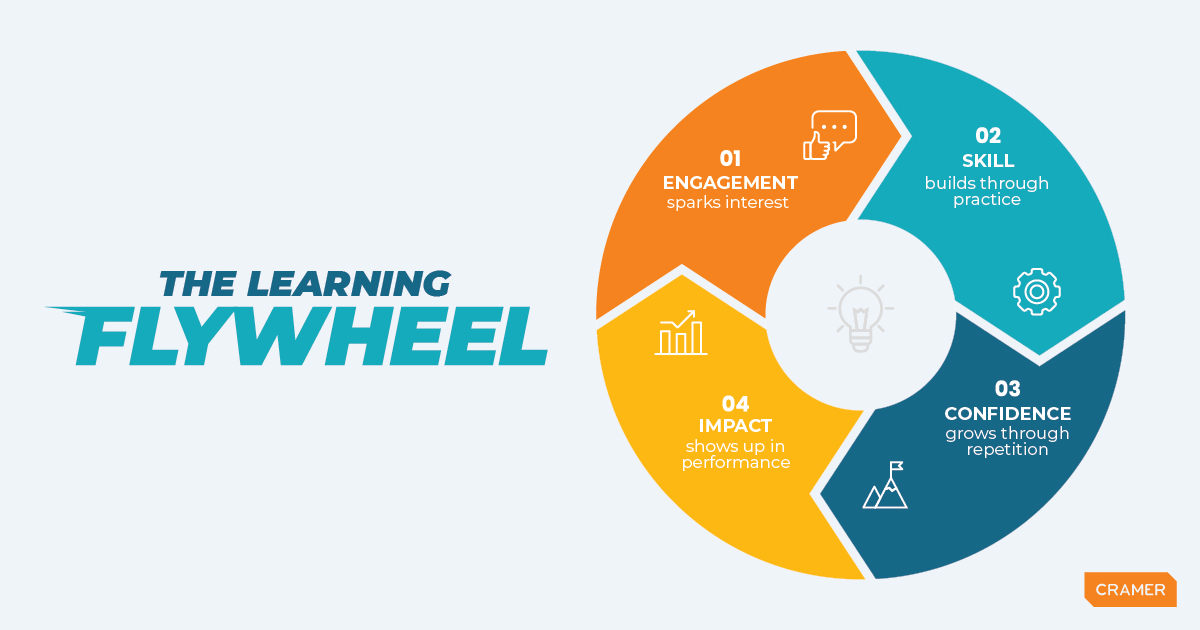
The Learning Flywheel for Senior Impact

Again, with Baby Boomers and Gen X making up much of the c-suite level of workers, there is authority; and as key decision-makers insights can be enacted quicker and spread quicker.

When experiential learning is designed as a system for this generational cohort — not just as a moment — it creates momentum that compounds over time: sharpening focus, bringing skills that strengthen business outcomes, grows confidence through shared exploration, and brings alignment across and organization decisions and direction.

For Gen X and Baby Boomers, this flywheel doesn’t just improve learning — it improves leadership effectiveness.

Earn the Room

Experiential learning earns its place with Gen X and Baby Boomers because it respects experience rather than overriding it. It prioritizes strategic relevance over volume, treats learning as decision support rather than training, and creates space for peer insight and shared perspective.

In a time defined by AI adoption, economic uncertainty, and talent pressure, learning environments must help leaders navigate complexity — not add to it.

When learning is designed with intention and respect, it becomes a unifying force across generations and roles.

Teach less. Create space to think more.

Have a project in mind?