Designing Learning That Works for a Changing Workforce

Designing Experiential Learning for Millennials and Gen Z (Part II)

In Part I of this series, we explored the generational learning myth — and uncovered the truth that experiential learning is the only learning model agile enough to support the four generations effectively.

Now, we shift from why experiential learning works to how organizations can build it to work consistently, creatively, and at scale. In this piece, we focus specifically on Gen Z and Millennials — the cohorts actively reshaping how learning is experienced — before widening the lens in Part III.

From Insight to Implementation: Building the Multi‑Generational Learning Ecosystem

Organizations leading the future aren’t relying on one‑off events or content dumps; they’re creating event driven learning ecosystems that blend immersive experiences, digital reinforcement, reflective practice, and measurable behavior change.

Today’s rising workforce is showing us exactly what they expect from learning environments through how they research. While 75% of research is still done via Google search, we see those numbers quickly changing as younger generations begin to dominate the workforce. According to Cramer’s generational research report, The Perspective Series, an increasing number of Gen Z and Millennials have turned to other platforms for learning and research.

Per the report, 48% have turned to AI assistants (ChatGPT, Copilot, Claude, etc.), 40% to YouTube, and 32% prefer short, entertaining videos. The common thread is that this generation gravitates toward learning that feels human and experiential — whether through conversational feedback, quick personalized answers, or a visual, sensory layer that makes information easier to absorb in real time.

When it comes to learning, 55% of the Millennial-Gen Z cohort says podcasts are useful for workplace development, and 56% want AI to deliver real-time session summaries. The message is clear: learning strategies must evolve beyond static decks toward more immersive, digestible, and memorable experiences.

They’re drawn to immersive tech (41%), wellness activations (45%), and F&B-driven moments (45%), and they rank skills-based training as the top priority for the future of work.

These aren’t passing preferences — they signal a shift toward live, socially driven engagement. Experiential learning ecosystems are no longer optional; they’re the model most aligned with how today’s workforce learns.

Below is what that ecosystem looks like — and how to design it for a multigenerational audience.
The Spark: Where Learning First Comes to Life

These are the moments where learning sticks, because people aren’t just told — they do.

What this looks like:

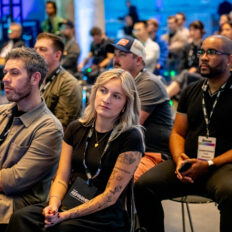
High-impact learning moments take shape through collaborative learning labs, hands-on simulations, and multi-sensory breakout environments where teams actively engage with real challenges. Live problem-solving alongside peers and coaches accelerates the shift from concept to capability while fostering cross-generational collaboration.

Why it works:

Experiential learning triggers emotion, memory, and shared effort — the three forces that drive long-term retention. People remember what they experience, not what they hear.

How to elevate it (creative execution + edutainment):

Elevation comes from designing learning with the same care as any great experience. The most effective programs feel intentional in how they unfold — using narrative flow, shifts in energy, and moments of interaction to keep learners engaged and present.

In these environments, learning doesn’t happen in isolation. It’s supported by the space, the pacing, and the people guiding the experience. Participants aren’t just absorbing information; they’re responding to it, testing it, and shaping it together.

This is where edutainment plays a role — not as spectacle, but as a way to create emotional memory. When creativity is applied with purpose, learning becomes something people don’t just complete, but instead carry with them.

Extending the Energy: Technology that Keeps Learning Alive

Learning must continue long after the session ends.

What this looks like:

Technology-enabled learning ecosystems leverage AI-assisted networking, real-time session summaries, personalized digital nudges, gamified recall challenges, and interactive learning installations to keep learning active beyond the room.

Why it works:

People are already learning this way on their own — searching, scrolling, listening, and watching their way to insight. With 56% now expecting real-time AI session summaries, the demand isn’t just about convenience; it’s about reducing cognitive overload and reinforcing understanding while information is still fresh.

How to elevate it:

Engagement increases when reinforcement mirrors the content formats people already gravitate toward. Session summaries can become micro highlight reels, nudges can function as choose-your-next-move prompts, and recall can take the form of brief, gamified missions. Interactive installations extend learning into physical space, while short videos, how-to content, and podcasts reinforce momentum rather than feeling like homework.

Reinforcement shouldn’t feel like homework — it should feel like momentum.

From Action to Identity: Where Learning Becomes Behavior

Behavior change happens between sessions, not during them.

What this looks like:

Sustained learning is driven through on-the-job challenges, peer coaching circles, structured reflection prompts, and micro reinforcement delivered over 30, 60, and 90 days — all tied to measurable behavior shifts.

Why it works:

Application builds competence. Reflection builds awareness. Together, they turn learning from a moment into a habit.

How to elevate it:

Reflection becomes more effective when it’s story-driven rather than worksheet-based. On-the-job challenges gain traction when framed as collectible missions, while peer coaching circles evolve into generational exchange pods.

This is where information becomes identity.


Designing for Nuance: Meeting the Generations Driving Change in One Shared Experience

Up to this point, we’ve focused on building the ecosystem. Now, we refine it. Reframing the nuance from Part I as actionable design principles, we focus on Millennials and Gen Z — the cohorts actively redefining how learning is experienced. Thereon, Part III will expand the lens to include Gen X and Baby Boomers. A well-designed experiential journey ultimately supports every generation without fragmenting the experience.

Gen Z

What they want:

Speed + Visual + Utility + Personalization

Why it matters:

They learn from short, searchable, entertaining formats — exactly the ones they prefer (32% short videos, 26% how to content).

How to design for them:

The core to what makes this generation learn is being involved in what is happening — not by observing, but by doing. The feeling as though they are part of something bigger than themselves is key to not only better understanding, but creating a stronger community and culture connected to a brand — in other words, pride.

To act on this, gamification and interactive motion-led content stand at the forefront — attendees can’t sleep on it because they must be engaged, they can’t dose off mid-seminar like typical sessions.

Relevance First: Designing for the Millennial-Gen Z Majority

Another defining expectation is real-world relevance upfront. As digital natives, Millennials and Gen Z are self-directed learners — turning to platforms like YouTube and ChatGPT to advance their development on their own terms. They are motivated by personalized, relevant learning pathways and immersive tech experiences that feel immediate and applicable. And with 56% expecting AI-powered session summaries, reinforcement isn’t optional — it’s part of their learning rhythm.

The Momentum Model

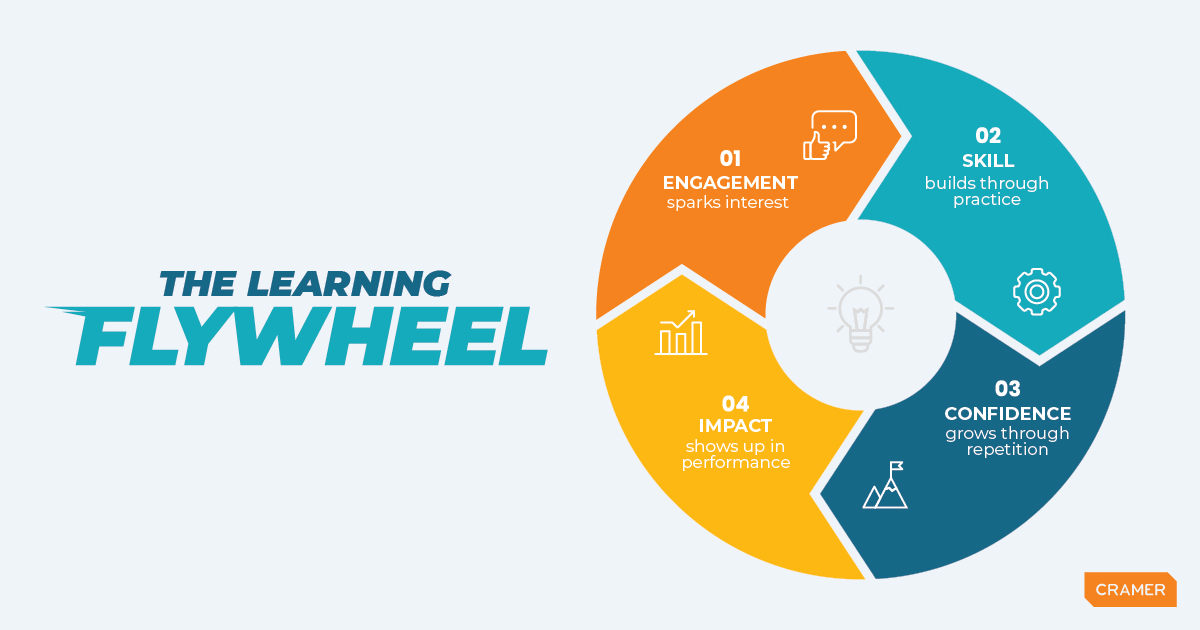
When experiential learning functions as a system — not a moment — engagement builds skill, skill builds confidence, and confidence drives impact. That upward momentum is what turns participation into performance.


In a workforce defined by change, learning must function as momentum — not a moment. With 70% of the workforce projected to be Millennials and Gen Z by 2030, this is the system they expect — and the one future-focused organizations must design to stay relevant.


Data sourced from Cramer’s proprietary generational research which analyzes individuals across a spectrum of industries, exploring how different generations participate, communicate, and act, both in the workforce and online. It blends quantitative research with cultural foresight and digital behavior analysis and is designed to help marketers and brand experience leaders engage a diverse workforce.


Have a project in mind?