Data in Motion: Why Every Event Is a Gold Mine of Insights

The Hidden ROI Inside Every Experience

Marketers love to talk about “proving ROI”, but, in reality, most event success stories stop at applause, attendance, or a glowing recap deck. The real opportunity hidden under the glamor of an event is the first-party data and insights you can collect from your attendees. It’s a living gold mine.

When you treat them that way, every event — whether it’s a global summit or a 50-person leadership offsite — becomes a source of insights that fuel smarter decisions, stronger ROI, and better use of budgets over time.

Events aren’t just a show — they’re living, breathing experiments. They give businesses a chance to learn about their audiences, engage with prospects, and turn real-time data into insights that drive growth. In a world shaped by rapid tech innovation and new generations entering the workforce, first-hand data isn’t just helpful — it’s essential to understanding where your brand stands and how to evolve with your audience. Year over year, strategy can be amended, budgets, adjusted, but it has to start somewhere.
The Post-Cookie Shift

The end of third-party cookies has left marketers scrambling for new ways to understand their audiences. Events quietly solve that problem. Unlike ads or impressions, which measure reach but not resonance, events reveal what people do in real time.

Who registered? Who stayed engaged? What sparked conversation, and what fell flat? These aren’t vanity numbers — they’re actionable signals. And the best part? You don’t have to host a 5,000-person conference to capture them. Even intimate, well-designed events can surface insights that ripple through your entire strategy.

Before the Event: The First Signals

Every event begins with a question: are the right people showing up? Pre-event data can answer that. Registration conversions, audience makeup, even pre-event content clicks all give you an early read on market fit and who your brand appeals to — you may even learn you have an audience that you have yet to tap into.

A small tweak in this phase can create an outsized ripple; in some cases, by increasing registration conversion by just 10% has translated into 18% more qualified leads downstream. For internal events, teams that complete pre-work often deliver 15–20% better results in the following quarter.

That’s not trivia — that’s proof that the event is already creating a measurable impact before the doors even open.

During the Event: Real-Time Decisions

The event itself is where “data in motion” truly comes alive. Sure, attendance is nice — but real engagement is the currency that matters. In today’s world, an event shouldn’t just be a keynote with a packed room of people half-listening. It should feel like a show, a production — one where strategy and quick pivots create real moments that keep your audience engaged, entertained, and interacting with your event systems every day.

Real-time event data helps answer questions like: How long did people stay in sessions? Which polls sparked the most participation? Did sponsors actually connect with the right people?

Take one global summit as an example: organizers noticed a breakout session was half-empty. Using a live dashboard, they quickly pushed out an app notification and offered a giveaway. Within 30 minutes, attendance jumped from 45% to 78%. Session ratings climbed, too.

That’s the beauty of real-time insight — you can pivot in the moment and turn passive attendees into active participants.

Events aren’t parties you throw together for customers and prospects; they’re opportunities for businesses to truly learn about their audiences and create emotional connections. When you design experiences that deepen brand loyalty, deliver market insights, and lay out the groundwork for ROI, you’re not just hosting an event — you’re building something that lasts.

After the Event: The Proof Point

Applause is nice, but follow-through is where ROI is earned. Post-event data closes the loop by showing whether the experience changed behavior, advanced deals, or improved sentiment.

For example, a tech brand doubled its trial-to-paid conversions by targeting follow-up offers based on session participation. Another organization extended industry buzz for months by repurposing event content into a digital series.

These aren’t just happy accidents — they’re proof that thoughtful measurement creates momentum long after the lights go down.

Connecting the Dots

What separates great event teams from the rest isn’t just more dashboards — it’s better storytelling. Pre-event signals help predict what will happen during the event. During-event participation gives clues about what’s likely to happen afterward. When you connect these touchpoints, you get a full picture of value that leadership can understand at a glance.

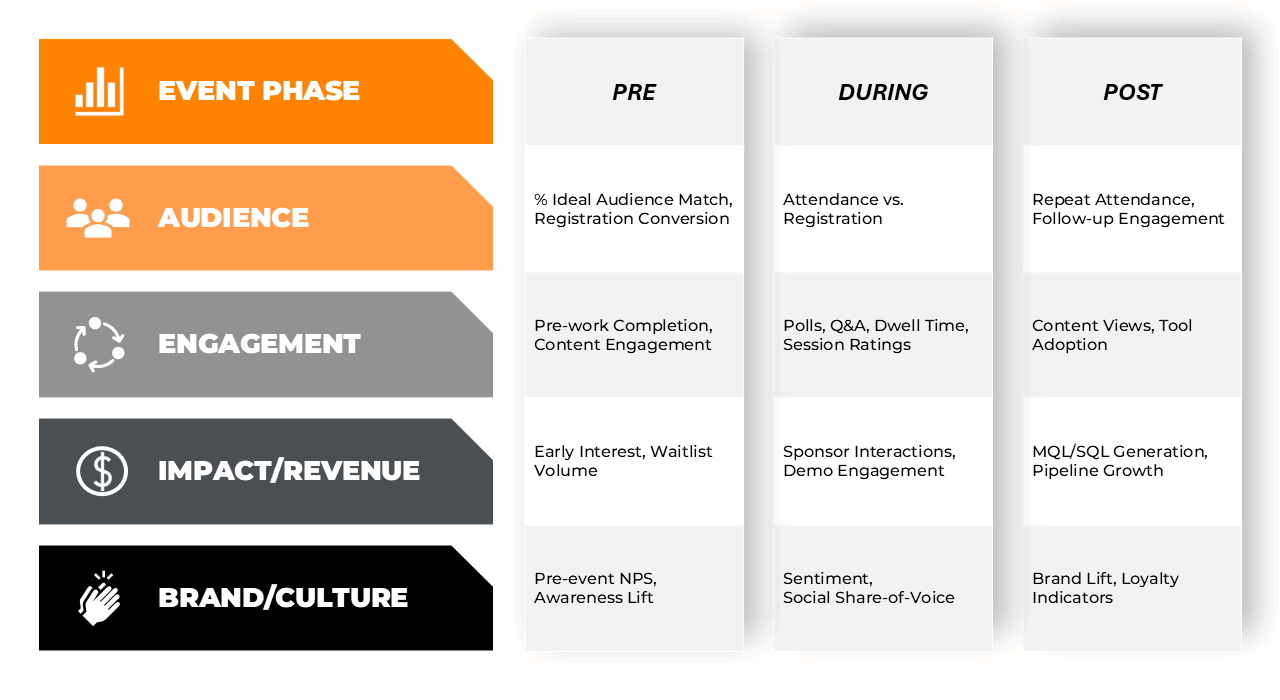
At Cramer, we call this the Unified Scorecard — a way to track the right numbers, link them across the event lifecycle, and turn events into ongoing strategy, not just one-off moments.

Here’s a simplified breakdown of how it works:

Use this scorecard to:

  • Compare events apples-to-apples
  • Spot what’s working (and what’s not)
  • Tie event activity directly to business outcomes

Why It Matters

Events aren’t just cultural highlights, but research and data engines. They generate the kind of first-party data that’s harder and harder to find anywhere else. And with smart measurement, you can “right-size” them to your budget, scale them over time, and still walk away with insights that make the next event even better.

In a world where noise is endless and attention is fleeting, the brands that win will be the ones that treat every event as a gold mine of insight — not just a moment on the calendar.

Have a project in mind?