The Building Has Been the Venue All Along

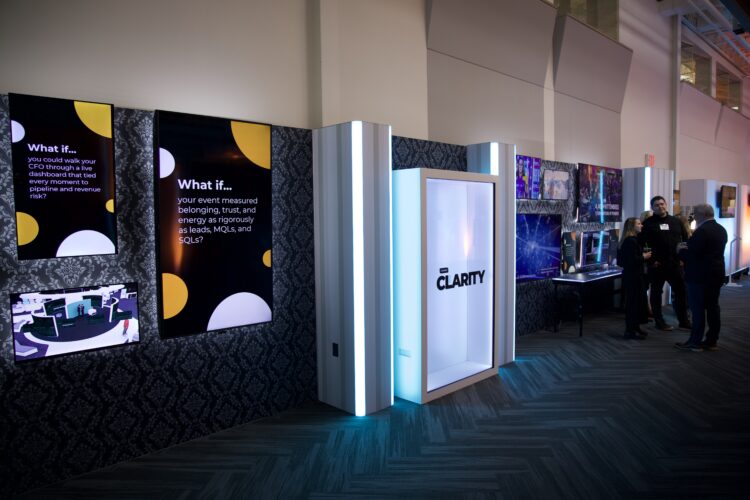
Cramer's Virtual Ballroom — A broadcast-ready event venue built into our headquarters.

There’s a moment in most event planning cycles where the venue search and the production conversation are still happening in separate rooms. While one person is pricing out hotel ballrooms and conference centers, the other is figuring out what the production build truly requires. By the time those two tracks meet, there are already compromises on the table: from rigging points that don’t line up, bandwidth that can’t support the broadcast, and catering and furniture vendors that are eating up production budget. The event hasn’t started, and it’s already working against itself.

Cramer’s headquarters outside of Boston was built so that moment never has to happen.
A Building That Runs Like a Venue

Our largest studio, Studio A, acts as the main production environment inside Cramer HQ. This broadcast-quality event space has a list of capabilities that positions itself not just as a space that can be transformed for a variety of set designs, but with technology that can power any content engine.

Studio at a Glance
  • 34×18-foot 4K LED wall — fully controllable backdrop
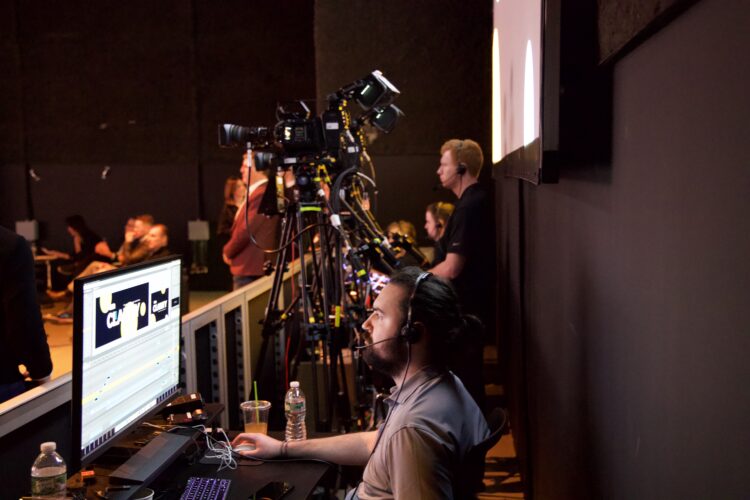
  • 6 Broadcast-quality cameras and switching systems
  • On-site producers, operations staff, and IT infrastructure
  • In-house catering — morning coffee through evening reception
  • Capacity for up to 70 on-site guests
  • Live broadcast capability to audiences of any size
  • Free parking in our private lot

Here, the room and the production capability are the same thing. There’s no negotiation between them, no outside vendor adapting to a space they’ve never worked in before, and no show-day friction generated by the venue itself. When a client brings their message into Studio A, everything else is already there. Between our design teams, video directors, editors, speaker coaching, and our warehouse that houses all our show equipment, our studio can be transformed into your brand experience.

When a Client Made It Their Own

Not long after, a client came to Cramer with a problem that most product launches handle badly. They needed to announce a major new product to a distributed workforce — people used to receiving news rather than being part of it — and carry that internal momentum into a flagship industry conference. The internal event and the external debut had to tell the same story. Most production approaches would have forced a choice between them.

They booked our studio instead.

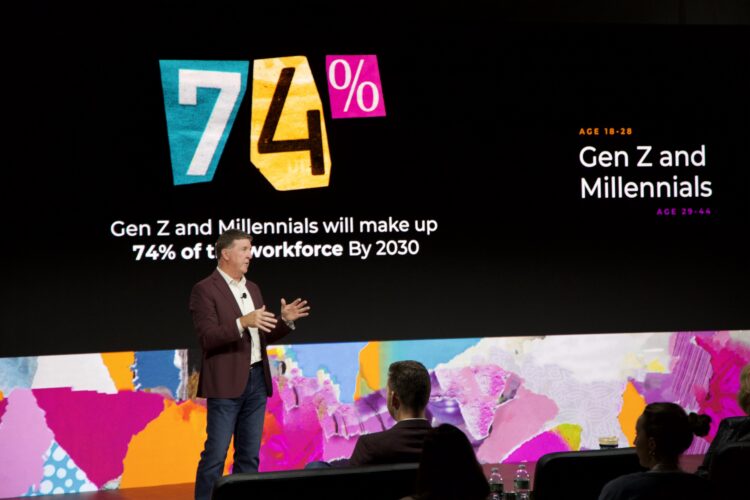
Sixty people came on-site and 5,000+ watched live. The production team ran both audiences on a single schedule — the in-room experience and the broadcast held at the same quality, without the gap that typically emerges when a live event gets streamed as an afterthought.

We worked with the client on their message and their speakers and helped them share it to their 60 guests and the thousands that joined the broadcast. Cramer’s headquarters handled everything — production, operations, catering, broadcast — as a single, coordinated effort. The internal event became the ignition point for a campaign that carried through to their public debut.

What the Room Makes Possible

The Studio Complex Takeover concept is Cramer’s formalization of what our studio and greater capabilities has been doing in practice all along — packaging the space, the production capability, and the full event services into a repeatable offering for clients who need a broadcast-quality environment without the overhead of building one from scratch.

The use cases are broader than they might first appear. A product launch that needs to reach an internal audience and an industry one in the same moment. An executive keynote that has to land in a room of fifty and over a livestream to thousands more. An internal summit where the production quality is itself part of the message — where arriving at a space that feels considered and capable signals something to everyone sitting in it. These are moments where the distance between a thoughtfully produced experience and a functional one is visible from every seat in the house.

Infrastructure aside, what this concept offers is the removal of problems that most event budgets absorb without naming — the cost, in time and money and creative energy, of making a venue work for a production that wasn’t designed around it. When the space and the team are already the same thing, that allow for more flexible budgeting before the first planning call.

Have a project in mind?