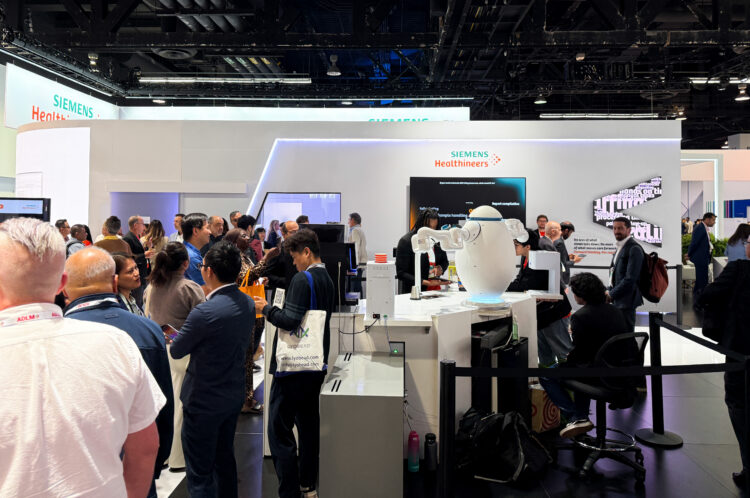
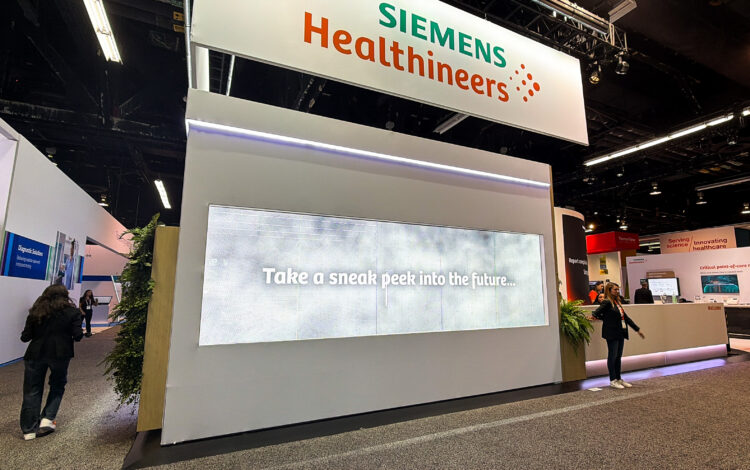
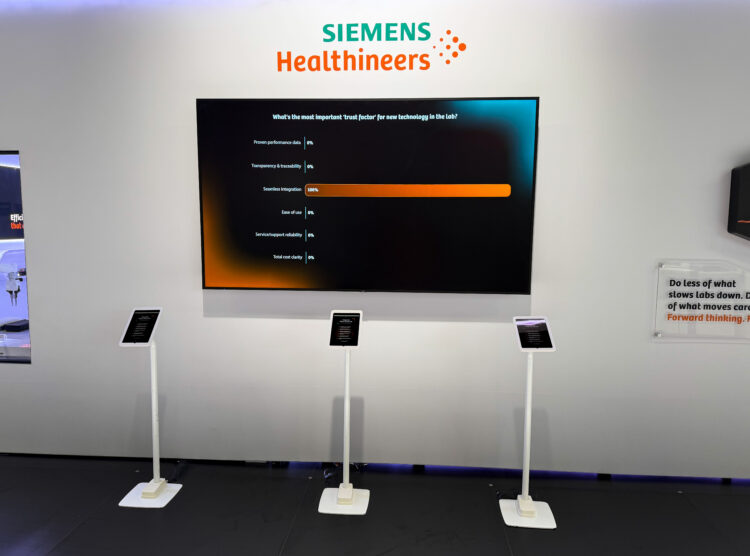
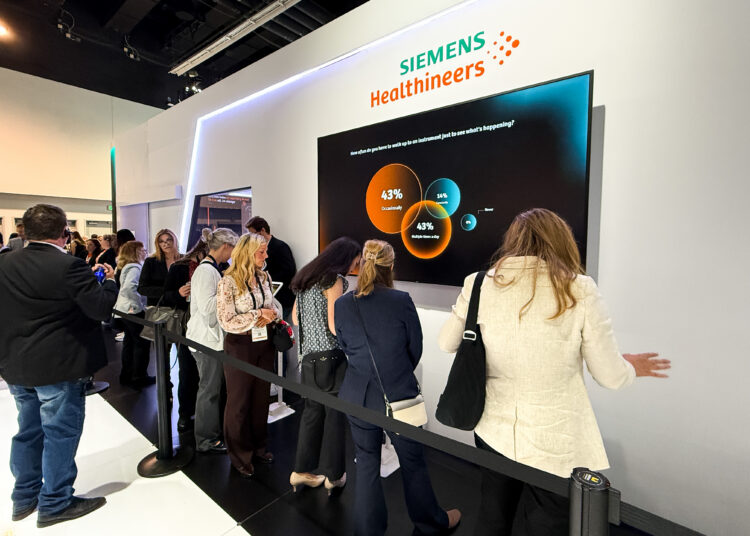
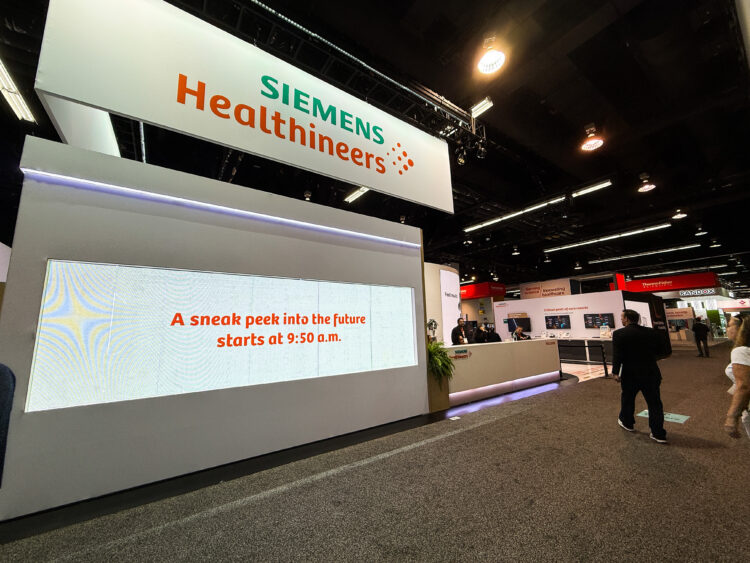
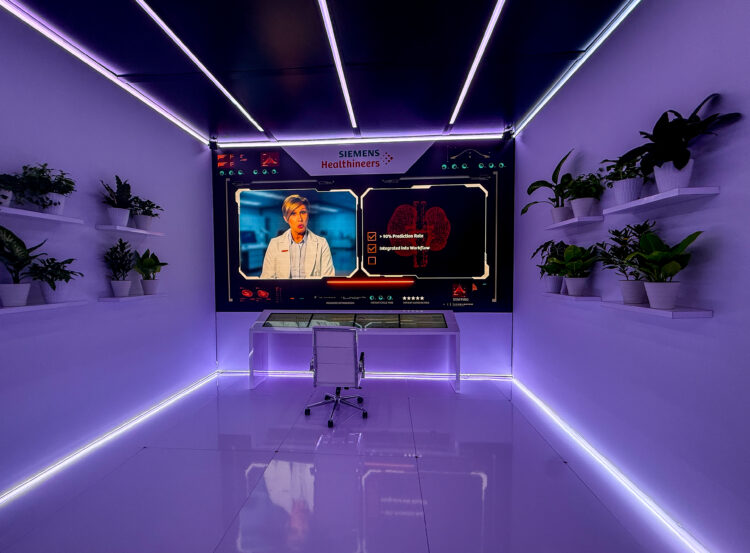
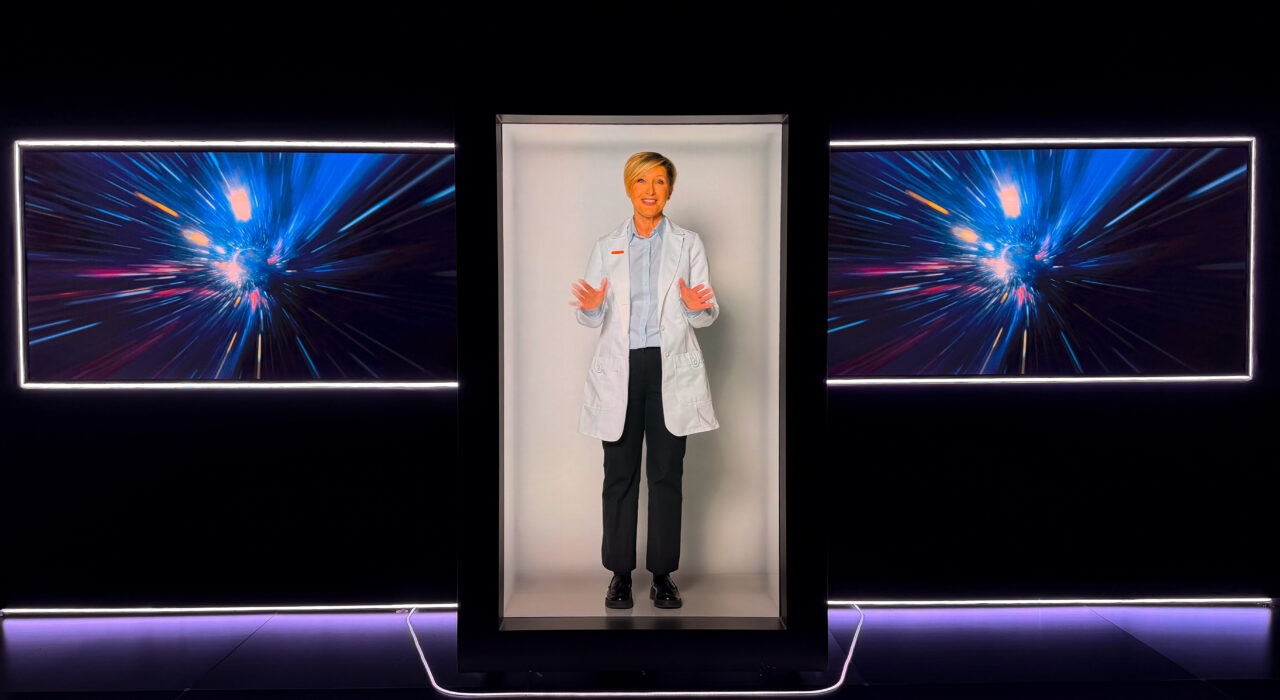
Cramer designed the booth as a single connected journey through our design-concept methodology.
1. Own the Experience Design, Not Just the Content
Cramer joined Siemens Healthineers early to help shape the concept and mood of each room — not just fill screens after the fact. Those sessions informed the blueprints Siemens Healthineers’ fabricator built to, translating that direction into the physical materials and structure.
2. A Wall That Drew the Floor In Before Anyone Stepped Inside
A translucent LED wall — a technology still absent from commercial installation outside trade-floor showcases like CES — shifted from fully opaque to fully transparent, giving passersby a glimpse of the device before they joined a line, creating an exclusive experience of the product’s premiere, amplifying curiosity and intrigue.
3. One Host, Four Rooms, One Continuous Story
A single hologram host, built once and deployed across all four rooms, carried visitors from an interactive opening sequence through three consecutive device demos — a deliberate bet that continuity and storyline, not asset volume, would carry the experience.
4. A Story Told in Sequence, With Room to Talk at the End
Cramer drew on the pacing of a themed attraction — the story told in sequence, room by room — before releasing visitors into a final moment built for reflection and conversation. Visitors moved through the four connected rooms at a steady pace, absorbing the story piece by piece, before reaching the space designed for the one-on-one conversations with experts that the earlier rooms were building toward.
5. On-Site Ownership
As always, Cramer’s producer traveled on-site — in this case to Anaheim — to support rehearsals and confirm the experience held at full scale before doors opened. Siemens Healthineers praised the Cramer team for being the glue that kept the experience firing on all cylinders.